
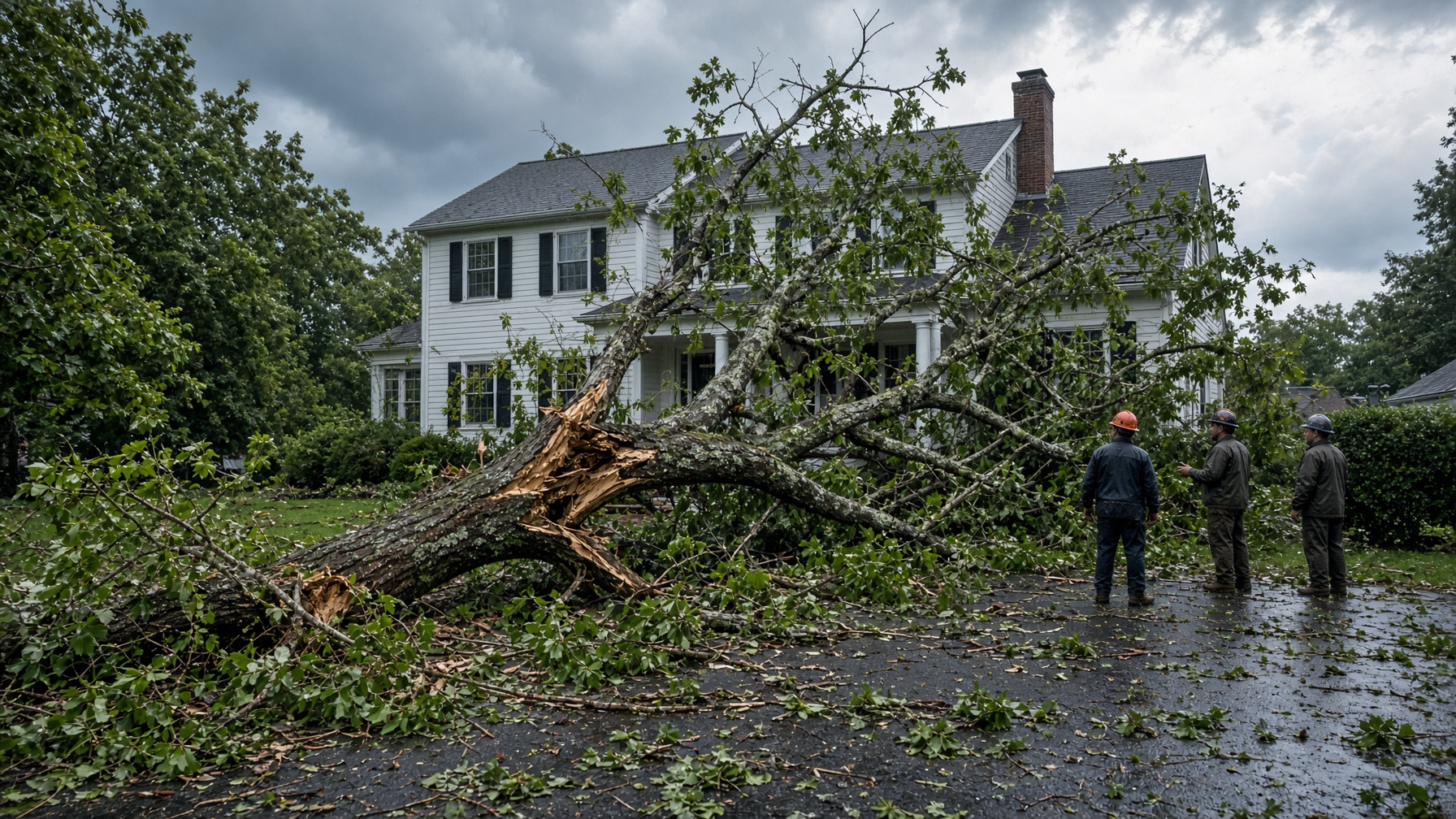
The Mid-Atlantic takes nor’easters, remnants of tropical systems, and wet heavy snow. Those storms drop trees on houses and leave hangers that fail a week later on a calm afternoon. After a widespread event, every company in the region is busy. We prioritize true hazards — trees on structures first — then work through debris and remaining risk. We also recommend taking dead and decaying trees down before the next storm, when the work is cheaper and safer.
What’s included
- Trees and limbs on homes and cars
- Hanging broken leaders
- Driveway and walkway clearing
- Lot-wide debris and slash cleanup
- Hazard reduction on remaining trees
- Preventive removal of dead and decaying trees
How it goes
- Triage the propertyStructure hits and access first. We will tell you what has to happen today versus what can wait for a scheduled crew.
- Cut, chip, haulFailed trees come apart safely. Debris leaves. We work around downed utilities and will not enter a scene the power company still owns.
- Walk remaining riskThe tree that fell is obvious. The cracked one still standing is the next claim. We point those out and price them separately.
Call us when
- A tree is on the house, garage, or car
- The yard is full of large debris you cannot move
- A split crotch or hanging limb is still in the air
- You want dead trees down before hurricane season
Questions
How fast can you get to storm work?
True emergencies — trees on houses — go to the front of the board. Widespread storms create a queue; we will give you an honest window, not a fantasy.
Should I try to cut it myself?
Not if it is on a structure, under tension, or near wires. Chainsaw injuries spike after storms. Call us.
Can storm work be prevented?
A lot of it, yes. Dead, decaying, and overextended trees fail first. An assessment before winter is cheaper than a roof.